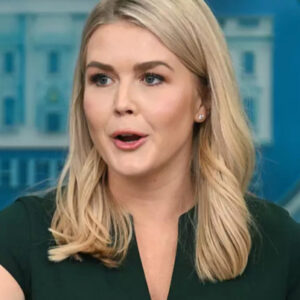
The Clash Between Karoline Leavitt and “The View”: A Crisis of Trust in Mainstream Media

The recent confrontation between White House Press Secretary Karoline Leavitt and the hosts of ABC’s “The View” has emerged as a defining moment that underscores the growing tensions in American media and politics. Leavitt, who is known for her forthright critiques of mainstream media, has accused these outlets of perpetuating bias and misinformation. The dialogue escalated during the show, especially when Whoopi Goldberg and other hosts defended their viewpoints; however, many observers interpreted their responses as emotionally charged and lacking in substance.
The Debate Over Media Bias

This incident transcended a simple on-air argument, sparking a broader dialogue about journalistic integrity and the necessity of diverse perspectives within political commentary. Critics, including prominent media analysts, contended that “The View” presented a unidimensional narrative that fell below professional journalistic standards. This perceived lack of objectivity has led many viewers to question the integrity of mainstream media, calling into question the fairness with which news is reported.
Such dynamics are particularly poignant in today’s media landscape, where the lines are increasingly blurred between news and opinion. As individuals seek out information that aligns with their ideologies, the critics of mainstream media, including Leavitt, argue for a more balanced representation of views. This clash illuminates the challenges traditional media faces in retaining credibility amidst a rapidly evolving political climate.
Social Media Amplifies the Conversation

The fallout from this encounter has been amplified on social media platforms, where many users expressed their disappointment with legacy media outlets. Discussions surrounding this issue have gone viral, with calls for greater accountability resonating among viewers disillusioned by sensationalism in reporting. Notable commentators, such as Megyn Kelly and Rita Panahi, have pointed to a troubling trend where sensational stories overshadow substantive journalism, further contributing to a decline in public trust in media institutions.
These developments indicate a significant shift in how audiences consume news content. Social media has provided alternative avenues for information, allowing figures like Leavitt to gain traction as influential voices advocating for reform within the media landscape. As more people turn to platforms that offer diverse viewpoints and critique the status quo, it raises questions about the future of traditional reporting.
A Crisis of Trust in Journalism

Ultimately, the incident between Karoline Leavitt and “The View” encapsulates a much deeper issue plaguing American media: a crisis of trust. As audiences become more skeptical of mainstream sources, they increasingly seek different kinds of information, often from alternative outlets that cater to specific political beliefs. This growing polarization poses a serious challenge for traditional media organizations striving to maintain relevance and credibility.
This crisis not only affects how news is consumed but also influences the political discourse in the United States. With the politicization of news, the demand for transparency and authenticity has never been higher. As figures like Leavitt continue to emerge and network within these circles, the traditional narratives dominating mainstream media are being put to the test.
In conclusion, the clash between Leavitt and “The View” serves as a wake-up call for traditional media. It exemplifies the urgent need for these institutions to reflect on their practices and strive for greater accountability in reporting. Audiences today are seeking authenticity, and it’s imperative that mainstream media adapts to meet these evolving expectations. For consumers of news, it is vital to seek out multiple viewpoints and demand better reporting standards. Let’s engage in the conversation about media integrity and find ways to reform how we consume news.